A hardware wallet = a signing device
Call it a “signing device”, not a “hardware wallet”
In 2016, Trezor gave its website a major redesign and changed the narrative from “wallet” to “signing device”. Few people know that Trezor could act as a signer for SSH, GPG, U2F, and FIDO2 almost from day one. The rename hurt Trezor’s sales badly — people still search with keywords like “hardware wallet”. But we should at least rename “Bitcoin hardware wallet” to “Bitcoin signing device” in our own heads.
A hardware wallet is capable of transmitting your private keys
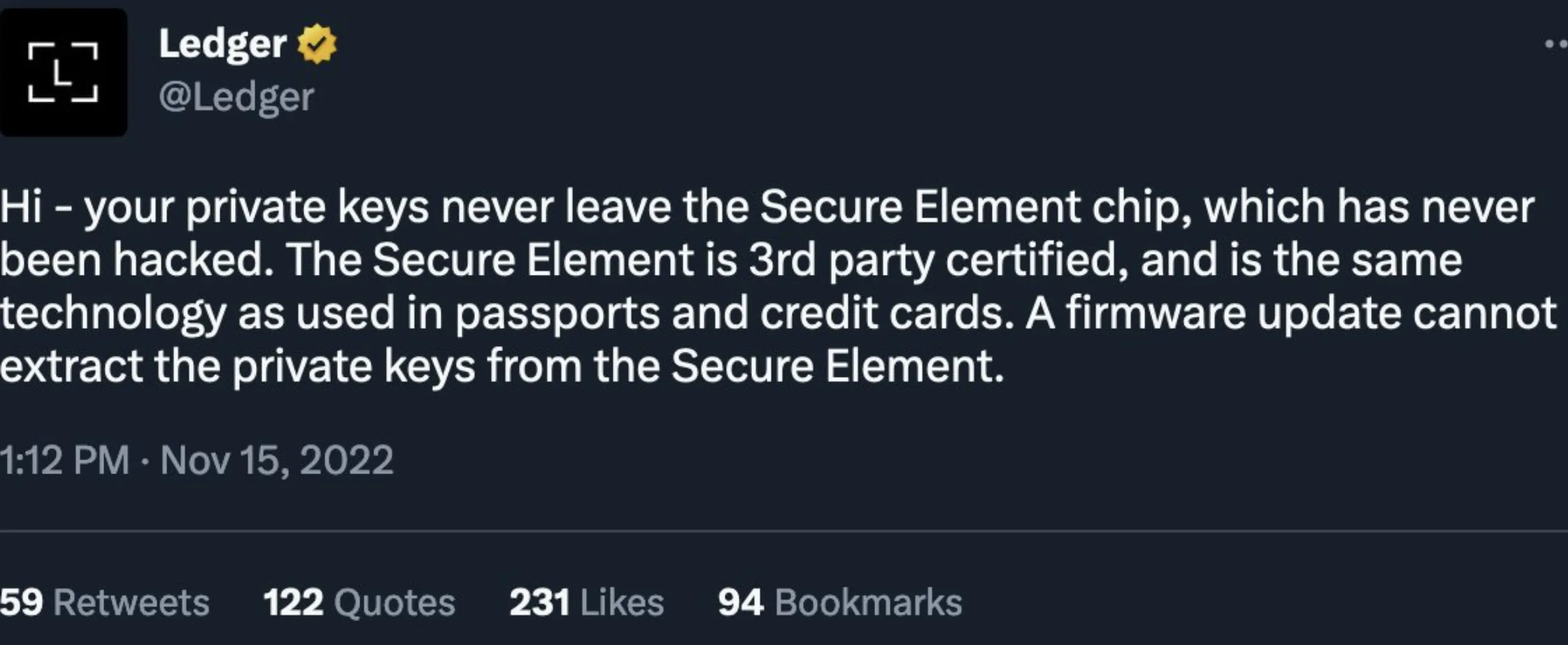
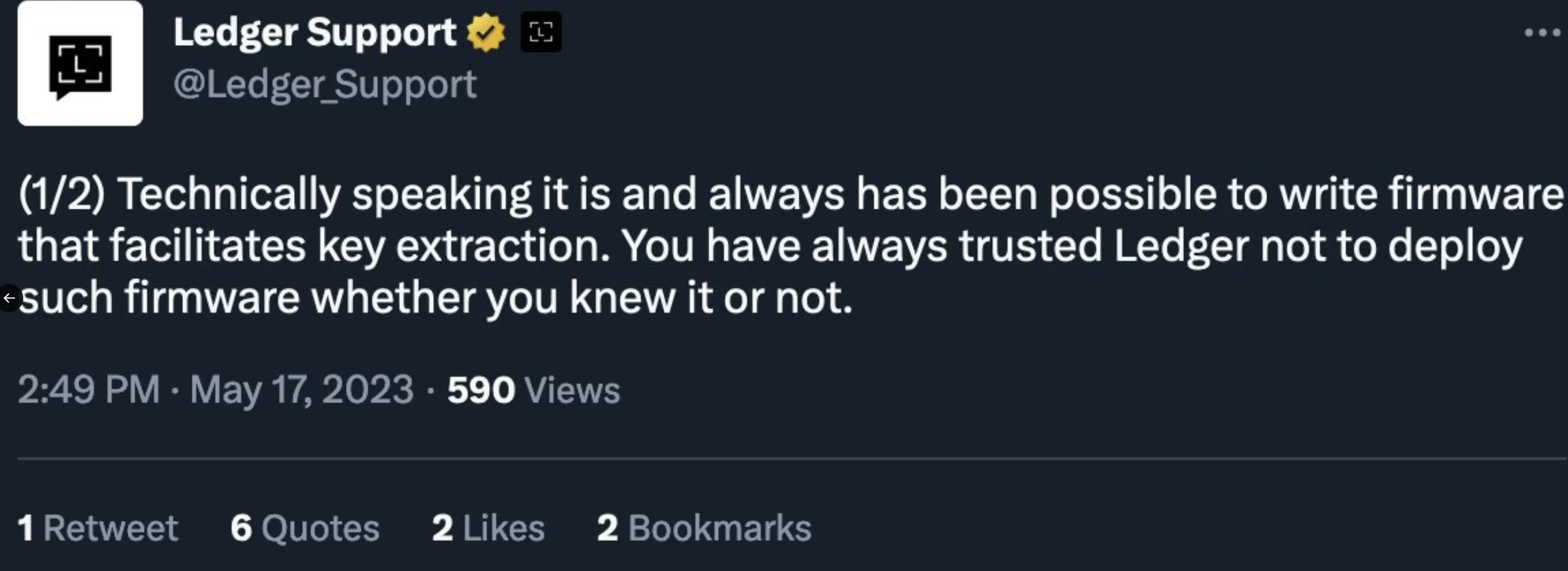
Assume that every hardware wallet is capable of uploading the master private key to a server with a single firmware update. Based on that assumption, this article sets out a few bottom-line rules for using one — rules that depend not on a manufacturer’s promises, but on what you can actually stick to yourself.
Rules for using a hardware wallet
- Signing device only — never generate seed words on the hardware wallet.
- Never use a passphrase-less wallet — that way, even if the seed words leak, nobody can be sure whether a hidden wallet sits behind them. Many people keep a small amount in a passphrase-less wallet as a “decoy”, but now that BIP39 is everywhere, the decoy only tells an attacker: there are more coins hidden behind a passphrase on this seed — go ahead and spend resources cracking it.
- Once the seed words are imported, never connect the official app again — pair the device with third-party open-source wallet software such as Electrum or Sparrow instead.
- Never type the passphrase into the official app to reach the hidden wallet — with a Trezor-style hardware wallet paired with Electrum or Sparrow, using a passphrase is smooth and completely problem-free.
The 2026 Coldcard incident made many people question hardware wallets. But as long as you stick to the rules above, a hardware wallet remains very safe as a signing device.
Comments
Comments are reviewed before appearing. Thanks for your patience.